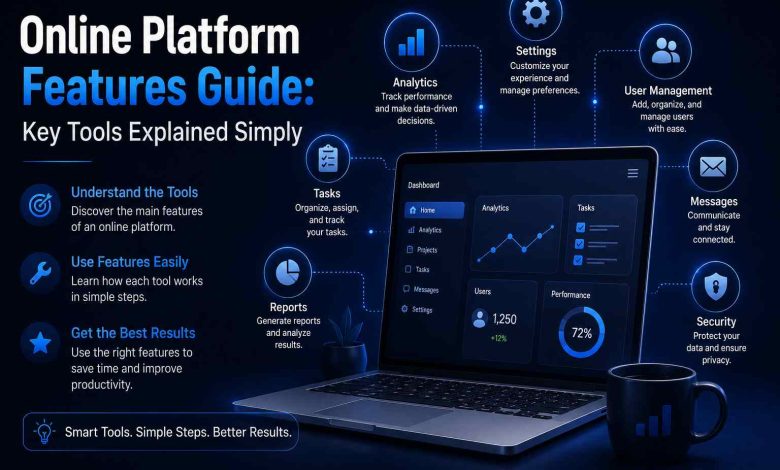
Learn about the main features of online platforms, including user accounts, search tools, communication, security, support, and easy navigation in simple words.
The internet has grown to be a vital component of daily digital existence. They are utilized in learning, communication, shopping, entertainment, work and many other activities. Many of the platforms have similar features, although the appearance is different on each.This online site provides a guide to the most common elements of contemporary online platforms. The aim is to explain these tools in plain English in order to make them accessible to both novices and experts.
What Is an Online Platform?
An online platform is a service that is provided and accessed online. This could be accessible via a website or even mobile app or both.There are different platforms and each has a specific role. Some of them are intended for talking, others for learning, shopping, working, entertainment or posting content.
While they may have different features and functions, many platforms have common components. These include user accounts, navigation menus, search, communication, notifications, settings and customer support.
Easy User Registration and Login
The first feature that users see is the account registration. A platform can enable users to register for an account with minimal details.
It is easier to get started because of its simple registration process. Once you’ve registered, you should be able to log in via a login page.
A good login procedure is clear and easy to understand. Users need to be familiar with where to enter their account information and for help in accessing their account.
Certain platforms might also offer account recovery features. These can assist users in getting back in when they have forgotten their logins.
Also read : Success motivational quotes
Simple and Clear Navigation
Navigation is a very essential part of any web site. It makes it easier for a user to navigate from one section to another without any confusion.A decent platform will have a well defined menu. Key areas ought to be easily discoverable. Simple names should be used for buttons and labels.
Users can, for instance, encounter the options Home, Profile, Search, Settings, Help, or Messages.Navigating well is a time saver! This also makes it easier for the user to give a better overall user experience, since they don’t have to wade through tons of pages to find a simple feature.
Search and Filter Tools
When there’s a lot of information on a platform, search tools are helpful. A user may type in a word or phrase to search all pages without having to check each page individually.Some sites have filters as well. Filters are there to help you narrow down to results based on various categories.
For instance, if a user is learning about a certain subject, they could filter the content by that subject on an education platform. A shopping platform can provide filters that correspond to the category, price, or some other information about the product.
Large platforms are easy to use with simple search and filter tools.
User Profiles and Personal Settings
There are many websites that offer personal profile pages. A profile may include simple data relating to the user and how he uses the platform.Personal settings may also be available for the user to access. These settings provide them with the ability to set their preferences, update their account details, or adjust some aspects of their usage.
The well organized section of the profile can make account management easier. The settings should be easy for users to comprehend prior to making changes.
Communication Features
Many of the online platforms have communication tools. They can be messages, comments, discussion areas, contact forms, etc. depending on the purpose of the service.The communication features assist users in communicating with other users or with the platform itself.
For instance, an instructional site could have forums where students can pose questions. Communication between users might be done via a professional platform that offers messaging.Good communication elements provide added value and enjoyment for an online service.
Notifications and Updates
Notifications keep users updated on key activity. A platform can push notifications of messages, account changes, new content, etc.
Effective notification systems should not be confusing, but should give useful information. Some websites will let you adjust your notification settings.It can help users determine what type of updates they want, and what type they don’t.
Mobile-Friendly Design
Online platforms are now used by many people on their smart phones and tablets. Therefore it is crucial to have a mobile-friendly design.The platform should be responsive and adapt to screen sizes. The text should be readable, buttons easily tapped, and menus should function correctly on smaller screens.
An application that performs well on both desktops and mobiles provides more flexibility. They can use the service with various devices, without any major layout issues.
Security and Privacy Controls
Security is another crucial aspect of an online platform. Users expect to receive a responsible and responsible treatment of their accounts and personal information.Platforms can offer features like account recovery, secure account recovery, password management, account verification, privacy settings, etc.
Privacy controls may additionally provide consumers with more control over their information. Having clear privacy settings can be particularly useful as users can see what their options are.A dependable platform should inform significant security and personal privacy alternatives in an easy-to-understand means.
Help Center and Customer Support
A well-designed platform can, at times, generate questions. That’s where the help and support features should come in handy.A help center may be on a platform that includes some common questions and simple solutions. Contact forms or other support may also be offered for some services.
The support section should be helpful and describe common problems. It should also provide guidance to the user as to what to do next if they require help.Providing support that’s easy for users to access can enhance their confidence and satisfaction.
Fast and Smooth Performance
User experience is also impacted by performance. It’s normal that users expect the pages to load quickly, and features to respond without any unnecessary delays.An efficient platform makes the day to day work easier. Having slow pages, broken buttons or repeated loading issues can make even the simplest task frustrating.
This is why web platforms these days are trying to increase page speed, stability, and performance.
How to Choose a Good Online Platform
Users need to take into account what they need the most when selecting an online platform.
Below are a few helpful suggestions:
- Does the website make it easy to navigate?
- Is it mobile friendly?
- Do the critical features or components of the concept are fully described?
- Does it offer search functionality?
- Do privacy and account settings have clear usage instructions?
- Do you have customer service?
- Does the platform run smoothly?
- Is the material arranged in a logical manner?
An analysis of these points can enable users to make the best decision.
Benefits of Understanding Platform Features
It’s useful to familiarize yourself with the features of the platform you’re using. Firstly it saves the time of the user. They can easily locate tools, rather than browsing through all the sections.
Secondly, it can boost productivity. Users who are informed of the features available will be able to take advantage of the platform.
Thirdly, knowing the location of settings and support options can help in making your account management easier.
Last but not least, users’ comfort level increases when they use a new online service if they know what to expect.
Conclusion
This online platform is now complete with guide shows and a good digital platform is more than a website or an application. It has a design, navigation, search tools, communication options, security options, support system and performance that all play a role in the user experience.
The ideal platforms are those that are simple and useful. They provide easy-to-understand and explainable features of important tools.
When you use an educational service, a shopping website, a communication tool, and various other kinds of digital platforms, knowing the primary features can assist you make the most of them with self-assurance and efficiency.
Frequently Asked Questions
What is an Online platform?
Online Platform: Digital service that is accessed via the internet. Can be used for communication, learning, shopping, work, entertainment or any online activities.
What makes a website successful?
User registration and login, search options, user profiles, notifications, communication, privacy settings, customer support, and mobile responsive design are common characteristics.
Why is easy navigation important on an online platform?
Navigation is easy, so that users can find information and features easily. If there is a clear menu and a simple structure, then it will be very comfortable and convenient to use the platform.
What makes online platforms safe?
Security features ensure user accounts and personal information is protected. Account verification, password management and privacy controls can offer greater protection of your account.
How to select a proper online platform?
It’s important for users to consider the features, usability, mobile compatibility, security options, content structure, performance, and customer support of a platform before deciding on a service.






One Comment